
Best Time to Visit Nusa Penida: Weather, Seasons & Crowds
For travelers planning a trip to Nusa Penida, understanding the seasons can help you choose the right time for the kind of experience you want. Whether you're looking for clear skies and turquoise water, quieter beaches, spectacular sunrise conditions, or a more peaceful island escape, there is a season that suits you.
8/21/20266 min read
Best Time to Visit Nusa Penida: Weather, Seasons & Crowds
Nusa Penida can be beautiful at any time of year. But when you visit can make a significant difference to your experience. The weather affects the sea crossing from Bali, visibility from the island's famous viewpoints, conditions at the beaches, and even how crowded the most popular attractions become.
For travelers planning a trip to Nusa Penida, understanding the seasons can help you choose the right time for the kind of experience you want. Whether you're looking for clear skies and turquoise water, quieter beaches, spectacular sunrise conditions, or a more peaceful island escape, there is a season that suits you.
So, When Is the Best Time to Visit Nusa Penida?
For most travelers, April to October is the most reliable period to visit Nusa Penida. These months generally bring drier weather, more sunshine, and better conditions for exploring the island's beaches, cliffs, and viewpoints.
However, the busiest months are typically during the middle of the dry season, particularly around July and August. If you want a balance between good weather and fewer visitors, the shoulder months around April–June and September–October can be particularly appealing.
The rainy season, generally from November to March, can still be a rewarding time to visit. The island becomes greener, visitor numbers can decrease, and accommodation may be easier to find. The trade-off is less predictable weather and potentially rougher sea conditions.
Nusa Penida's Dry Season
April to October
The dry season is generally considered the most popular period for visiting Nusa Penida. Rainfall tends to be lower, skies are often clearer, and outdoor activities become easier to plan. This is particularly useful for travelers who want to spend their days exploring the island's dramatic coastline.
During this period, you can expect favorable conditions for:
Beach visits
Coastal viewpoints
Sunrise photography
Island sightseeing
Snorkeling and marine activities
Hiking and walking
Exploring villages and cultural sites
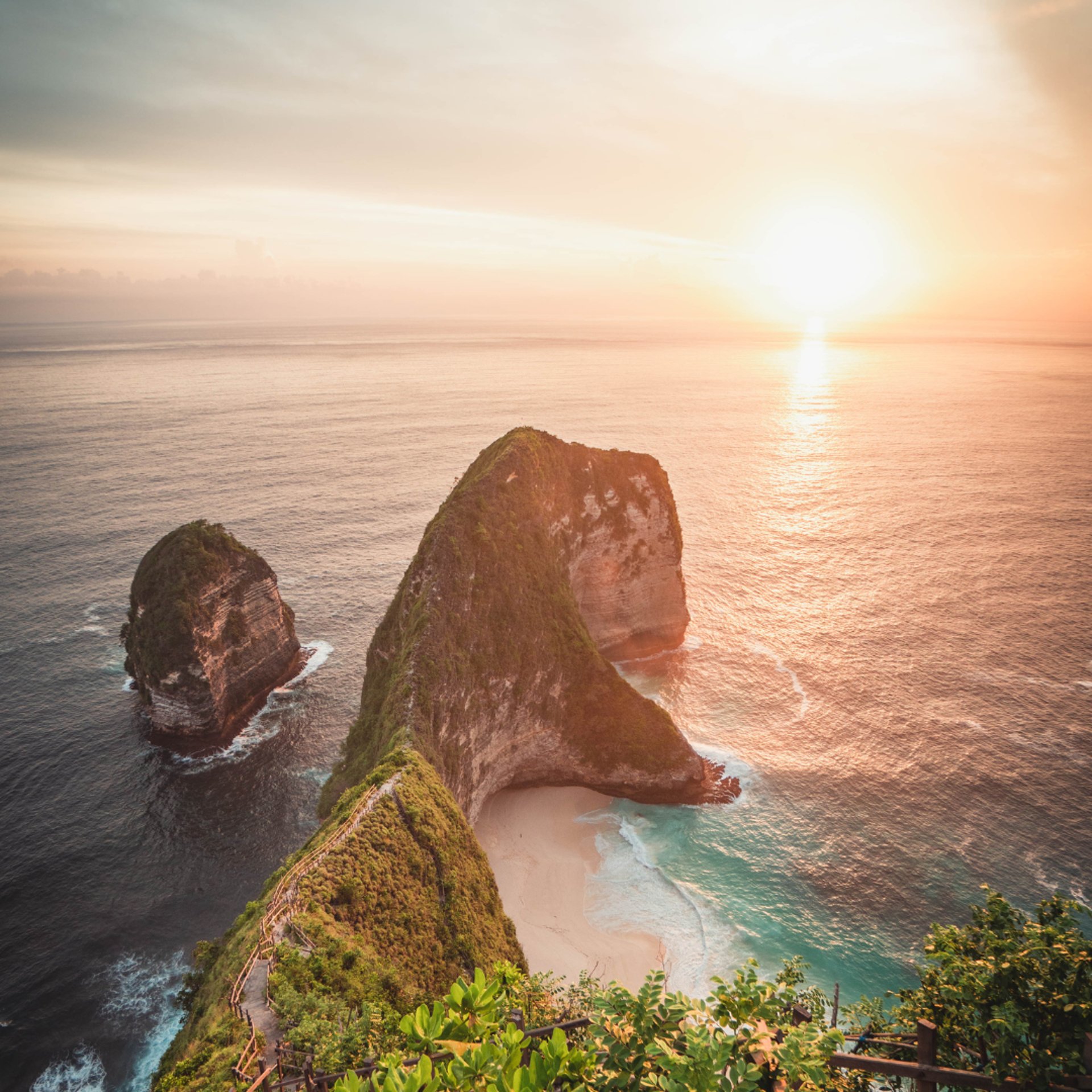
The eastern coastline can look particularly spectacular under clear morning skies. Diamond Beach, Atuh Beach, and Thousand Islands Viewpoint are especially rewarding when visibility is good.
July and August: Peak Season
July and August are among the busiest periods for tourism in Nusa Penida. The weather is generally attractive to visitors from around the world, while summer holidays bring additional demand from international travelers. Popular attractions can become busy, particularly during the middle of the day. If you visit during these months, consider changing your schedule rather than avoiding the island altogether.
Wake up early. Visit popular viewpoints before the tour groups arrive. Explore quieter beaches during the afternoon. And, whenever possible, stay overnight rather than trying to see everything during a single day trip. One of the biggest advantages of staying on the island is being able to experience famous locations before the main crowds arrive.
The Shoulder Season: April to June and September to October
For travelers looking for a balance between weather and crowds, the shoulder seasons can be excellent. The island may feel less busy than during the peak summer months while still offering many opportunities for clear and sunny days. These periods are particularly attractive for travelers who want to explore at a slower pace. You can spend the morning watching sunrise, explore the coastline during the day, and return to your accommodation without feeling like you need to rush through every attraction.
Nusa Penida During the Rainy Season
November to March
The rainy season brings a different side of Nusa Penida. Rainfall can be unpredictable, with periods of sunshine followed by tropical showers. For some travelers, this is actually part of the appeal. The hills become greener, vegetation becomes more vibrant, and the island can feel quieter than during peak season. However, weather conditions can also affect boat crossings and outdoor activities. If you're traveling during the rainy season, flexibility becomes more important. Rather than planning every hour of your trip around a fixed itinerary, leave some room to adjust depending on the weather.
Is the Rainy Season Worth Visiting?
Absolutely.
A rainy-season trip does not mean it will rain continuously. Tropical weather can change quickly, and some days may still provide beautiful conditions for exploring. The main consideration is that you should be prepared for changes.
Bring:
A lightweight rain jacket
Waterproof bags for electronics
Shoes suitable for wet surfaces
Flexible travel plans
Extra time for transportation
The reward can be a quieter and greener Nusa Penida.
Best Time for Sunrise
If sunrise is one of your priorities, the eastern side of Nusa Penida is particularly special. Diamond Beach, Atuh Beach, Thousand Islands Viewpoint, and the surrounding coastline face toward the morning sun. Clear mornings provide the best visibility, but even partially cloudy conditions can create dramatic colors across the sky.
The most important factor is not simply the month you visit. It is where you stay. If you're staying on the eastern side of the island, you can reach sunrise viewpoints much more easily than travelers arriving from Bali on a morning day trip.
At Aloka Penida, guests can begin their morning with views across the eastern coastline before heading out to explore.
Best Time for Beaches
If your priority is spending time on the beach, the dry season generally offers the most predictable conditions. Clearer weather and calmer periods can make beach visits more enjoyable. However, ocean conditions always depend on the day.
Even during the dry season, waves and currents can be strong around parts of Nusa Penida. Always pay attention to local conditions and signage rather than assuming that a beach is safe simply because the weather looks good.
Best Time for Photography
Photographers may actually benefit from visiting outside the busiest period. Early mornings provide soft light, cooler temperatures, and fewer people in photographs. Sunrise locations around East Nusa Penida are particularly rewarding. For dramatic landscapes, early morning and late afternoon generally provide softer light than the harsh midday sun. The rainy season can also create dramatic skies and greener landscapes, giving photographers a different visual character from the dry season.
Best Time for a Quiet Nusa Penida Experience
If your priority is peace rather than perfect weather, consider traveling outside peak season. The shoulder months and rainy season can offer quieter experiences at popular attractions. But there's another way to avoid crowds regardless of when you visit:
Change your schedule.
Arrive early.
Stay longer.
Explore during quieter hours.
Visit less-famous locations.
And spend time away from the major tour routes.
This is one of the reasons staying two or three nights can completely change your experience of Nusa Penida.
How the Seasons Affect Boat Travel
Because Nusa Penida is an island, weather conditions can affect transportation. Fast boats connect Nusa Penida with Bali throughout the year, but schedules and crossings can occasionally be affected by sea conditions. During periods of rough weather, delays or changes can occur.
If your trip involves a flight from Bali immediately after visiting Nusa Penida, leave enough time between your boat arrival and your flight. A little extra flexibility can prevent unnecessary stress.
When Should You Visit Nusa Penida?
There isn't one perfect month for everyone. Instead, think about what matters most to you.
Choose the Dry Season if:
You want the most predictable weather and plan to spend most of your trip outdoors.
Choose the Shoulder Season if:
You want a balance between good weather and fewer crowds.
Choose the Rainy Season if:
You don't mind unpredictable weather and prefer greener scenery, quieter attractions, and a slower atmosphere.
Choose Peak Season if:
Your travel dates are fixed and you're prepared to plan around crowds.
A Better Way to Think About Timing
The best time to visit Nusa Penida isn't necessarily the month with the least rain. It is the time that matches the experience you want. A traveler searching for perfect beach weather may choose the dry season. A photographer might prefer a quieter period with dramatic skies. A couple may prioritize peaceful sunrise mornings. A cultural traveler may care less about the weather and more about having enough time to slow down and explore. Nusa Penida can accommodate all of them.
Stay Long Enough to Experience the Island
Perhaps the biggest mistake is focusing too much on choosing the "perfect" travel date and not enough on giving yourself enough time. A single day can show you the famous sights. Two or three nights allow you to experience the island differently.
You can wake up for sunrise, explore the coast, discover local food, visit traditional villages, and simply enjoy moments without constantly watching the clock. At Kumanusa, we believe this slower approach reveals a side of Nusa Penida that many visitors miss.
Whether you stay in the heritage surroundings of Umah Ilu Island Retreat or wake up overlooking the eastern coastline at Aloka Penida, the island becomes more rewarding when you give it time.
Final Thoughts
Nusa Penida does not have one single best season. It has different seasons, each revealing a different side of the island. The dry season offers reliable conditions and spectacular coastal views. The shoulder season provides a balance between weather and crowds.
The rainy season brings greener landscapes and a quieter atmosphere. Whichever period you choose, plan with flexibility, respect the island's natural environment, and give yourself enough time to experience more than the famous viewpoints.
Because the best time to visit Nusa Penida is ultimately the time when you can slow down, look around, and experience the island beyond the guidebook.


Your Island Escape Awaits—Talk to Us
We’re here to help! Whether you need more details about our accommodations, restaurant, or tours, feel free to reach out. Send us a message on WhatsApp, drop us an email. We’d love to hear from you and make your Nusa Penida experience unforgettable!
Aloka Penida's contact :
+62 877-7670-6876
alokapenida@gmail.com
© 2025. All rights reserved.
Umah Ilu's contact :
+62 852-3709-6589
umahilu@gmail.com